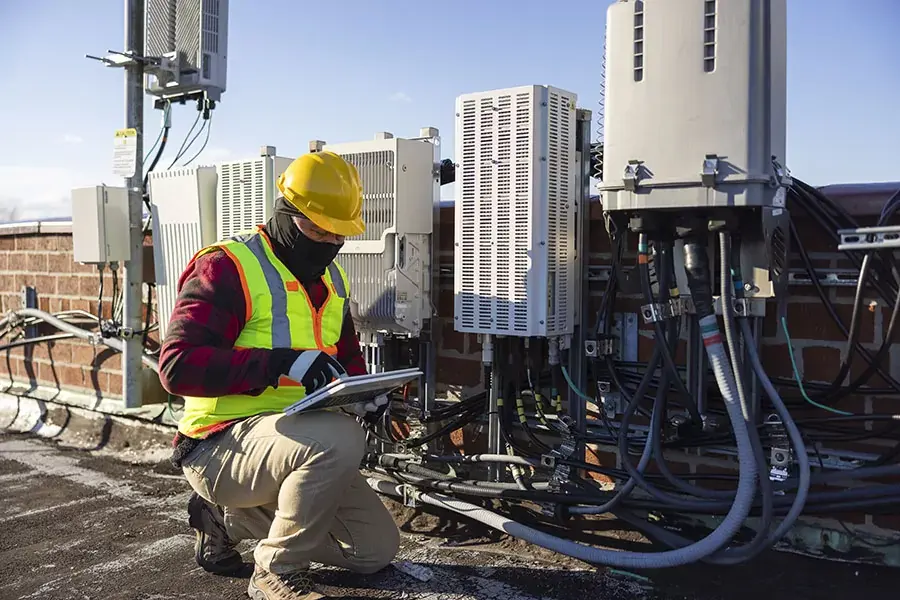
The challenge
PacWest covers a service territory with patchy cell coverage, so dispatch ran over two-way radio and paper switching orders carried in a truck binder. When a storm took down lines, restoration times were reconstructed by hand from radio logs — a process that took the operations team most of a week and rarely matched what the regulator asked for. Meter reads and valve-turn confirmations were written on paper tags and re-keyed at the office days later, which meant the asset map was always a little wrong. Crews wanted less paperwork; the board wanted faster, provable restoration reporting.
The approach
The core decision was offline-first: the crew app has to work with no signal and reconcile cleanly once a truck reaches a cell tower or the yard. We built route and dispatch on top of a GIS layer of valves, transformers, and meters, so a crew opens a job already knowing the asset history and the last three switching orders on that line. A SCADA event ingestion pipeline feeds outage starts directly into the dispatch queue instead of waiting for a phone call, and a report generator assembles the regulator-format restoration timeline automatically from field timestamps.
The outcome
“Storm season used to mean a week of radio-log archaeology before we could file anything. Now the timeline builds itself while the crew is still driving back to the yard.”